Portfolio
Homepage
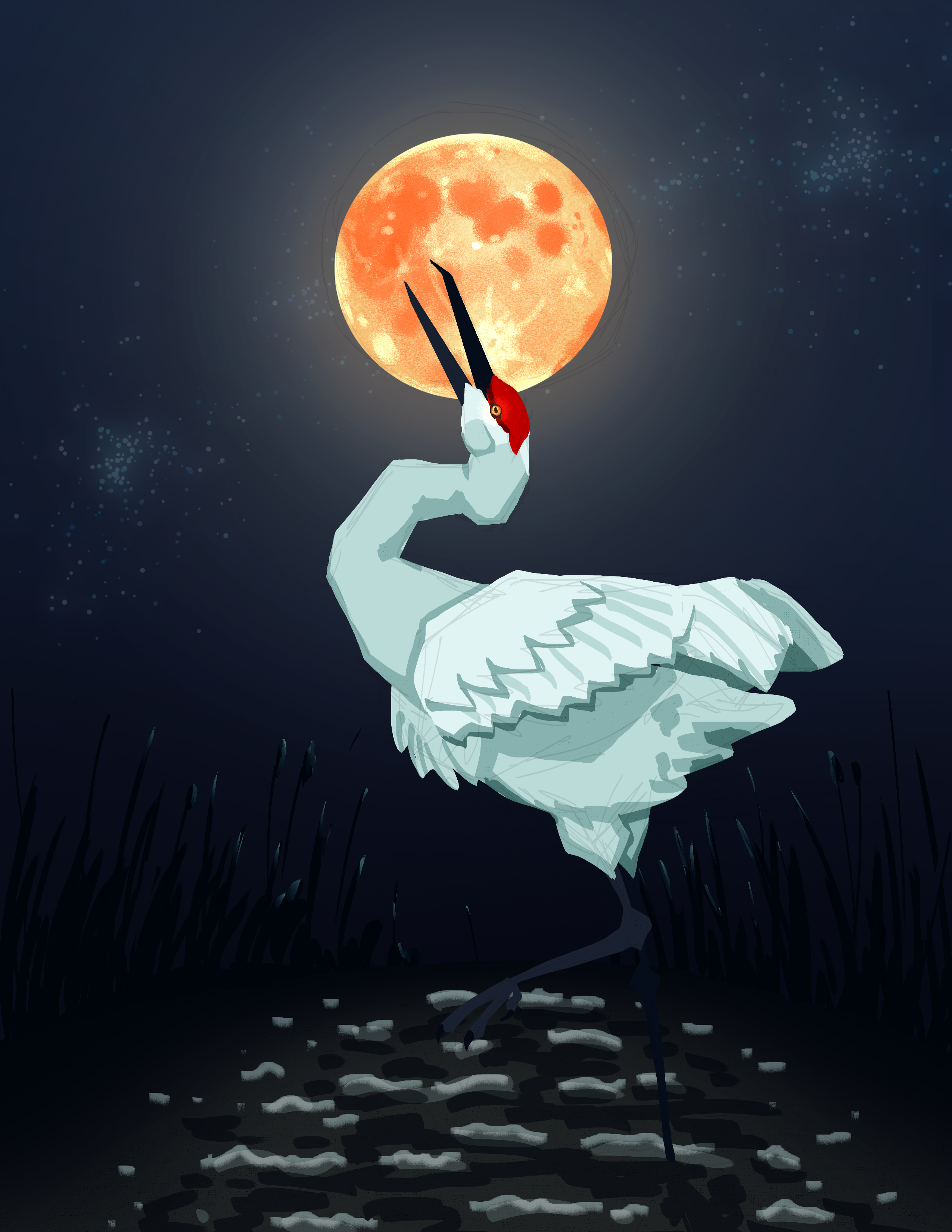
A geometric, simplistic image of a sandhill crane in a moonlit lake at night. It is throwing back its head and calling, with the moon behind its head. The process and idea was somewhat simplistic- sandhill cranes, when doing their courtship displays, look like dancers. I remember commonly hearing them in the summertime in the very early morning or early night before the sun had risen or after the sun had gone down. It's also inspired by how dancing was likely one of the first ever art forms.
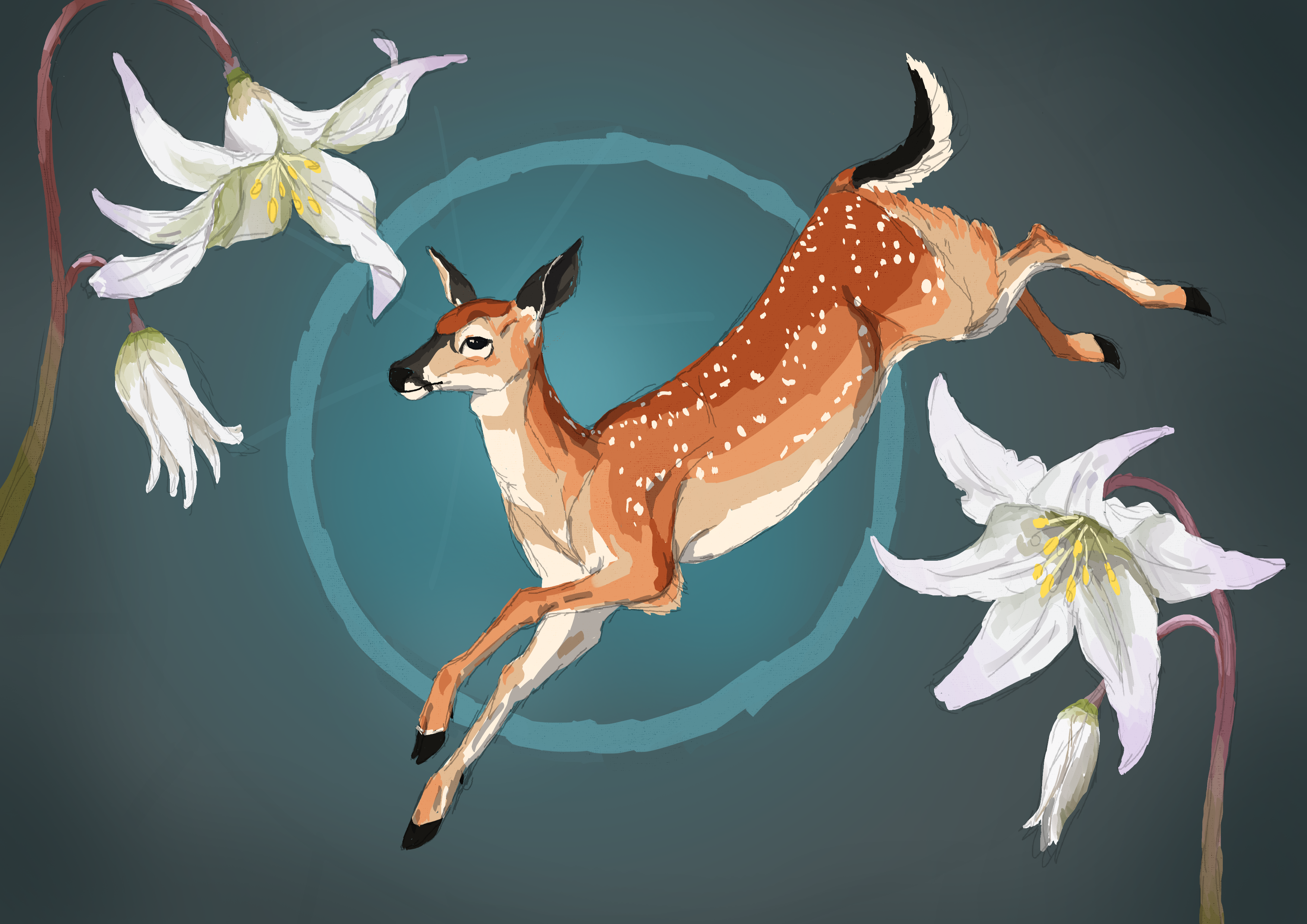
A fawn leaping to the left. In the corners are fawn lilies, a white lily with a mauve-green ombre stem. The background is a desaturated blue, with a ring behind the fawn. This is one part of a three-part series of drawings, inspired by color and the literary and literal connection between plants and animals. The goal was to create highly saturated images with a plant that represented the animal. Each image has mild stylistic differences but are all highly colorful and saturated.
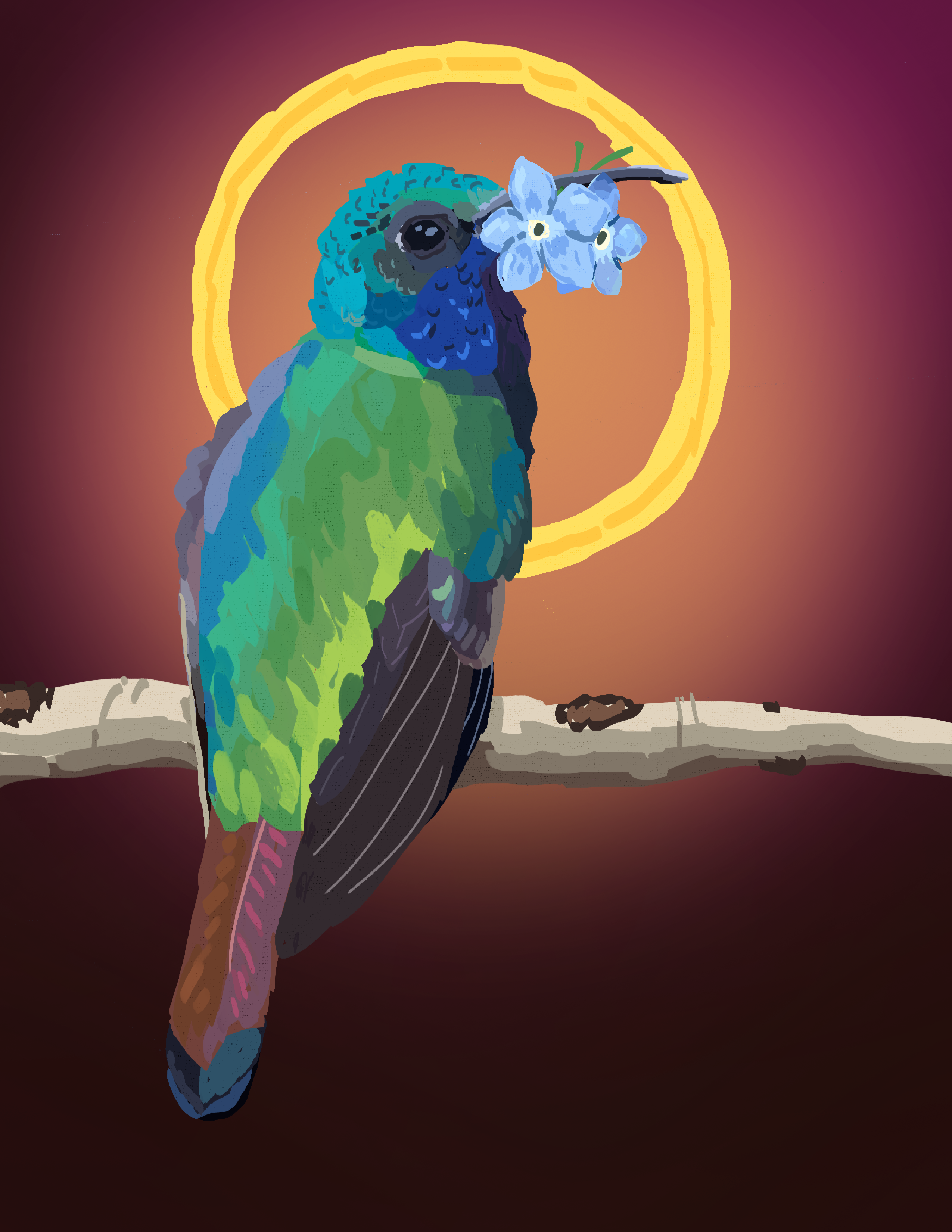
A Santa Marta Sabrewing, perched on a branch, facing away and looking back to the camera. It's holding forget-me-nots in the background. The background is mauve, with a golden ring behind its head. This is one part of a three-part series of drawings, inspired by color and the literary and literal connection between plants and animals. The goal was to create highly saturated images with a plant that represented the animal. Each image has mild stylistic differences but are all highly colorful and saturated. This piece stands out in the group because the flower is not directly named for the animal, but instead metaphorically represents it, as an animal that was highly endangered and brought back from the brink, as a declaration that the species was not forgotten.
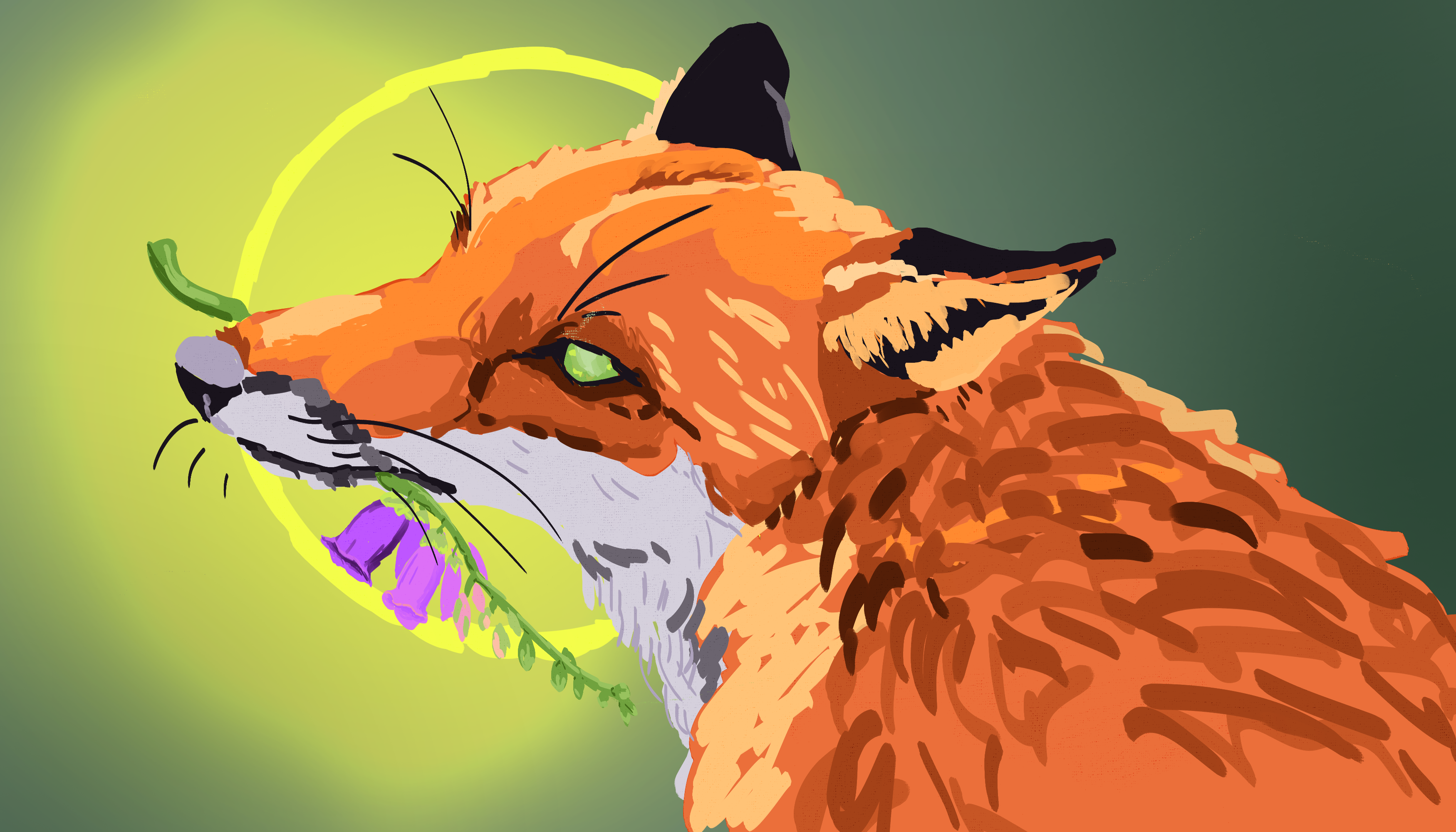
A shoulders-up image of a fox facing away, head turned back to look to the camera. The fox is holding a foxglove flower in its mouth. The background is green, with a yellow ring behind its head. This is one part of a three-part series of drawings, inspired by color and the literary and literal connection between plants and animals. The goal was to create highly saturated images with a plant that represented the animal. Each image has mild stylistic differences but are all highly colorful and saturated.
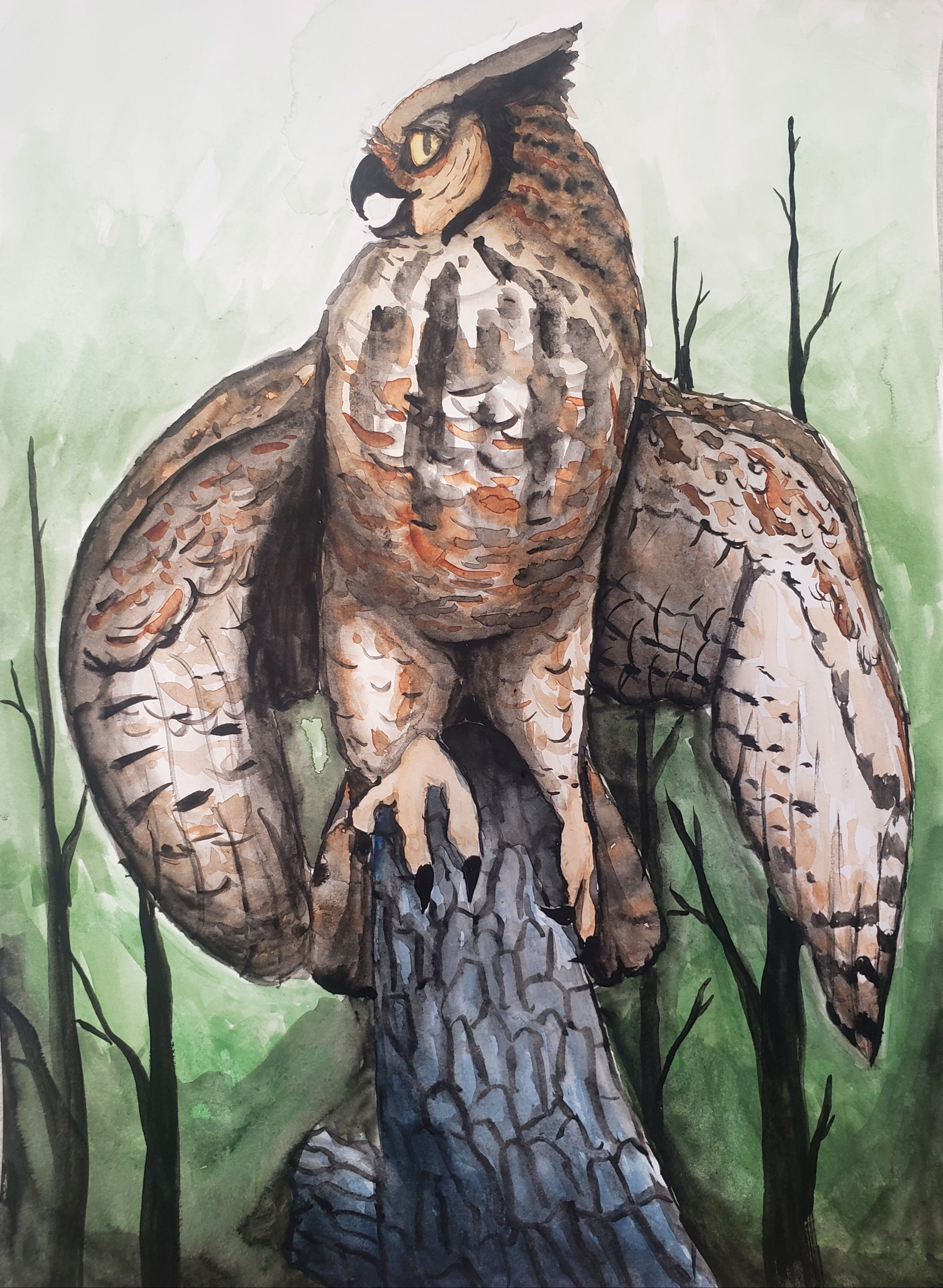
A watercolor painting of a Great-Horned Owl, perched on a burnt-out log. This was one of my better ventures into watercolor. I was rather happy with the texture and coloring on the owl. I wanted to practice side profiles for birds of prey because at the time I wasn't great at it. This is the moment I'd conquered that struggle.
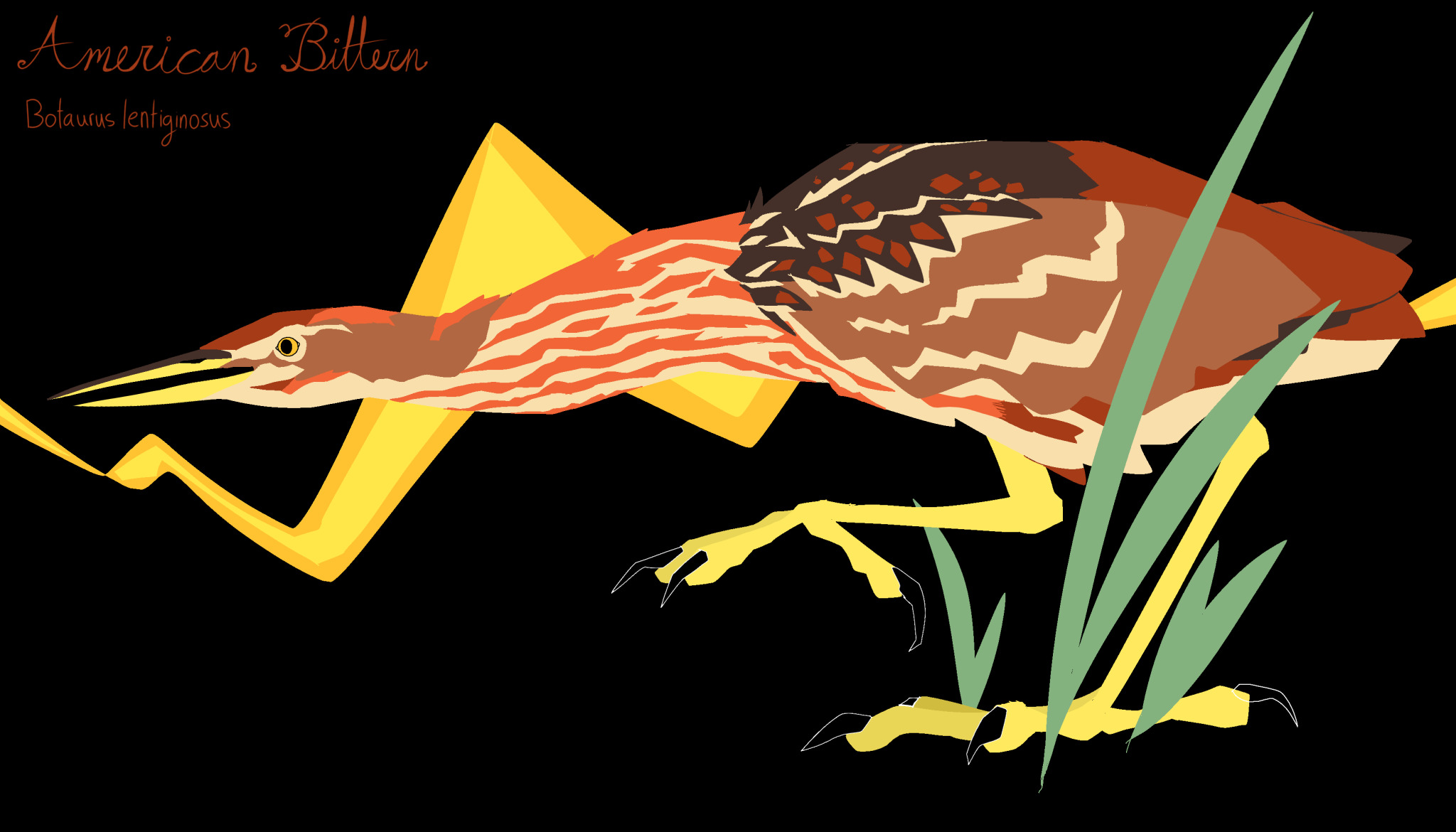
A highly stylized and geometric drawing of an American Bittern, sticking its neck forward and lifting one foot up. The background is black with a lightning bolt, and the top left says American Bittern in cursive, and below it, in print, is its scientific name, Botaurus lentiginosus. This was an earlier test into style and color. Lineless was a large struggle for me, so I decided to make a lineless drawing to test myself, inspired by scientific drawings and geometric styles. I'm still proud of the level of detail and effort put in.

A western meadowlark calling. It's perched on a barbed wire fence in a wheat field, a few scattered clouds in the sky. This painting was done in early spring inspired by the feeling I had listening to them call. I was struggling badly at the time, but listening to their distinctive heralding of spring helped me to pick myself back up and put passion back into my work.
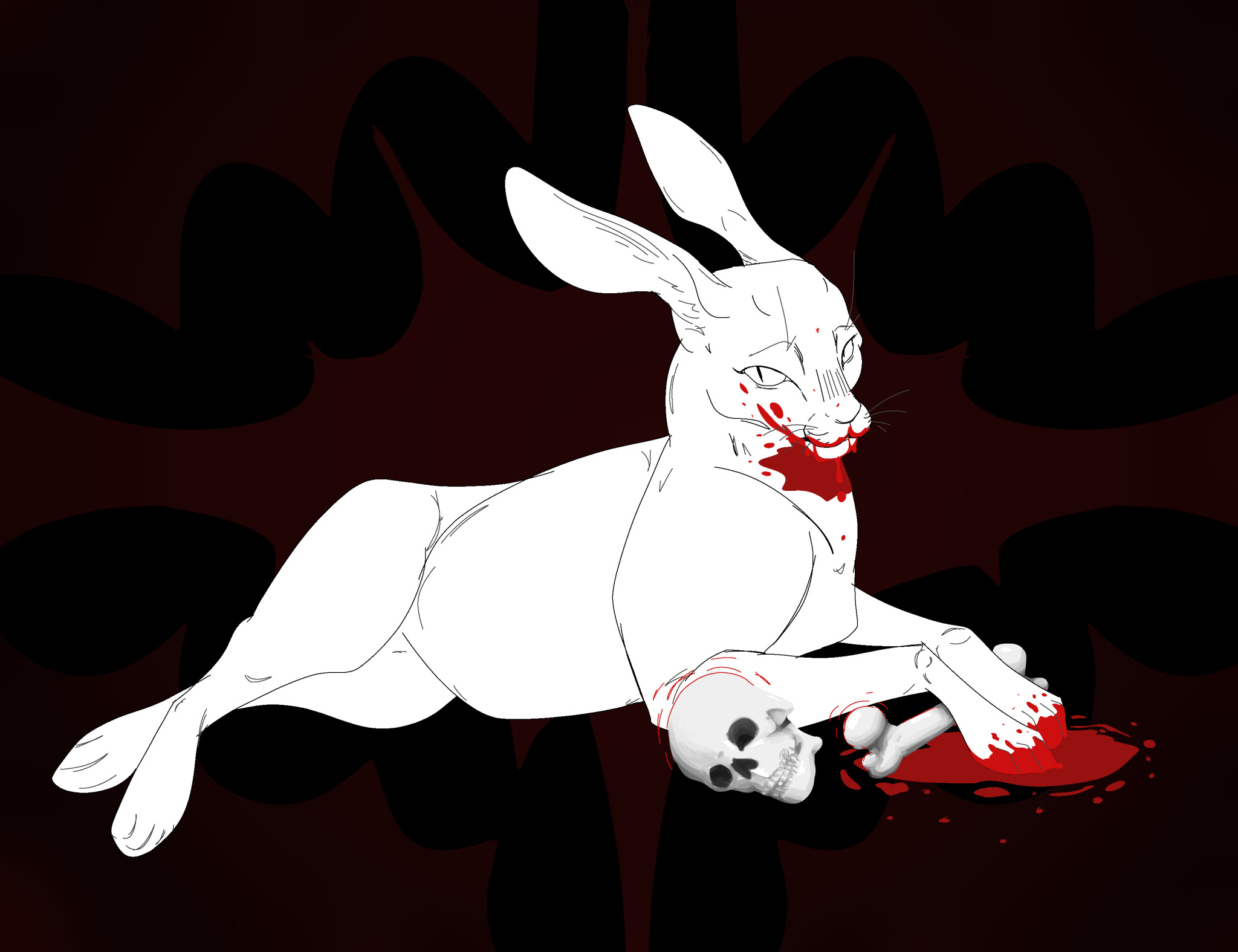
A white hare with blood on its muzzle and paws. It's laying down, paws resting on a femur, with a skull resting next to it. This drawing was a test of color, style, and anatomy. I decided that the visual motif of a predator-like herbivore would work much better with predator-like anatomy. I also used stylistic differences to make different parts of the drawing stand out, using my illustrative style for the hare and a painterly style for the bones. Horror and uncanny elements are a personal favorite to explore, as well as high contrast visuals, so this was a very fun piece to make.

A Przewalski's horse, trotting through a rocky landscape. The Przewalski's horse is the only non-domesticated horse species left on earth, and was highly endangered. This piece was heavily inspired by cave paintings of ancient horses, some of which may very well have depicted the Przewalski's horse. I colored the background in contrast with the horse to not stand out much visually, and used highly textured digital brushes to make it look like it had been spray-painted or some similar technique had been used on stone.
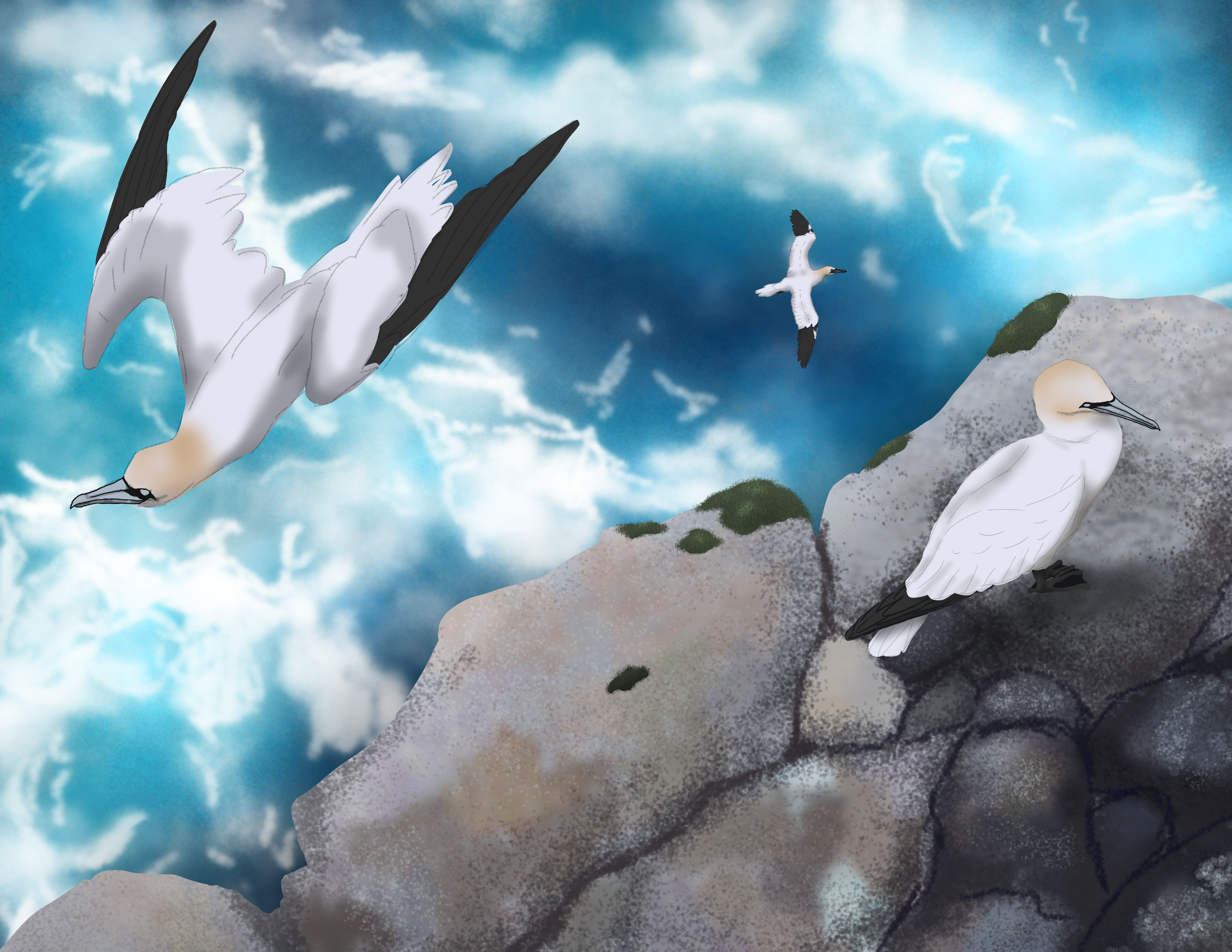
A seaside cliff scene. One gannet is perched on the rocks, one on the left is in flight with wings partially tucked, and far below the cliff, above the water, is a gannet flying with wings fully spread. This was another challenge in scenery. I tend to shy away from full scenes out of fear of losing readability, but the scenery and surrounding area is just as important to the ecosystem to the animals in it. Water especially is difficult, so I picked it as a subject for a challenge.